Roof Maintenance Tips for Homeowners
Roof Maintenance Tips for Homeowners
Central Texas weather is tough on a roof, from long summers and strong spring storms to hail and the occasional hard freeze. Regular roof maintenance helps you catch small problems, like a cracked vent boot or a clogged gutter, before they turn into leaks or costly repairs.
Many of these roof maintenance tips can be handled from the ground or from inside the attic. For anything that involves climbing onto the roof, it is safer to have a professional take a look.

1. Look Over Your Roof Twice a Year
For most Texas homes, inspecting the roof in spring and fall covers the two seasons that matter most: before storm season and before winter. From the yard, look for missing, cracked, or curling shingles, sagging areas, and anything that looks out of place. Binoculars make it easier to spot damage without climbing a ladder.
If you have a tile roof, tile roofing maintenance includes watching for cracked or slipped tiles and keeping foot traffic off the roof.
2. Keep Gutters and Downspouts Clear
Clogged gutters hold water against the edge of the roof, where it can soak into the fascia and back up under the shingles. Clean your gutters at least twice a year, and more often if trees hang over the house. Make sure downspouts carry water away from the foundation, and check for gutters that sag or pull away from the fascia.
While you clean, look for shingle granules in the gutters. A small amount is normal, but a heavy buildup can be a sign the shingles are wearing out.
3. Trim Overhanging Branches
Branches that touch or hang over the roof can scrape shingles, drop leaves that clog valleys and gutters, and give squirrels and other animals easy access to the roofline. During a storm, a heavy limb can cause serious damage. Keep branches trimmed back several feet from the roof, and hire a tree service for large limbs or anything near power lines.

4. Check Flashing, Vents, and Other Penetrations
Many leaks start where something comes through the roof or meets a wall. From the ground, look at the flashing around chimneys, skylights, and walls for gaps, rust, or metal that has pulled loose. Check the rubber boots around plumbing vent pipes as well. In Texas heat and sun, those boots can crack and split long before the shingles around them wear out.
5. Watch for Signs of Leaks Inside
Some of the earliest signs of roof trouble show up inside the house. Look for water stains on ceilings or upper walls, peeling paint near the ceiling, or a musty smell in upstairs rooms. A stain that grows after rain is worth checking right away, since catching a leak early usually means a smaller roof leak repair.
6. Check the Attic
A look in the attic once or twice a year can reveal problems that are invisible from outside. With a flashlight, look for dark stains on the rafters or decking, damp or compressed insulation, and daylight coming through the roof. Step only on the joists or on boards laid across them.
Good ventilation matters as much as the roof surface. A poorly ventilated attic traps heat in the summer, which can shorten the life of the shingles, and traps moisture in cooler months, which can lead to condensation and mold. If the attic feels extremely hot or you notice dripping from nails in winter, it may be time to have the attic ventilation checked.
7. Look Over the Roof After Every Major Storm
Hail, high winds, and heavy rain are a regular part of Central Texas weather, which makes preparing your roof for storm season worth the effort each spring. After a major storm, walk around the house and look for shingles in the yard, dents in gutters or vents, damaged flashing, and fallen limbs on the roof. Take photos of anything you find.
If you see signs of hail or wind damage, have the roof inspected before you file an insurance claim so you have a clear record of its condition. APEX Roofing documents storm damage with photos and video and works with insurance adjusters, though your insurance company decides what is covered.

8. Don't Let Small Repairs Wait
A missing shingle, a loose piece of flashing, or a cracked vent boot is usually a quick fix. Left alone, the same problem can let water into the decking and insulation and turn into a much larger roof repair. Address small issues as soon as you find them, and keep notes and photos of any repairs for your records.
9. Know What to Avoid
A few common habits can damage a roof or shorten its life:
- Walking on the roof when it is wet, or more often than necessary when it is dry
- Covering a leak with a heavy layer of caulk or roofing tar instead of repairing the cause
- Pulling up shingles or tiles to look underneath
- Letting leaves and debris sit in valleys or behind chimneys
- Mounting satellite dishes, lights, or decorations with nails or screws through the roof surface
Each of these can open a new path for water into the roof, often in a spot that is hard to find later.
10. Schedule Professional Roof Maintenance
A professional roof inspection covers what is hard to see from the ground: the condition of the shingles or tiles, the seals around each penetration, the flashing at walls and chimneys, and the decking from the attic side. Plan on one every year or two, and after any major storm.
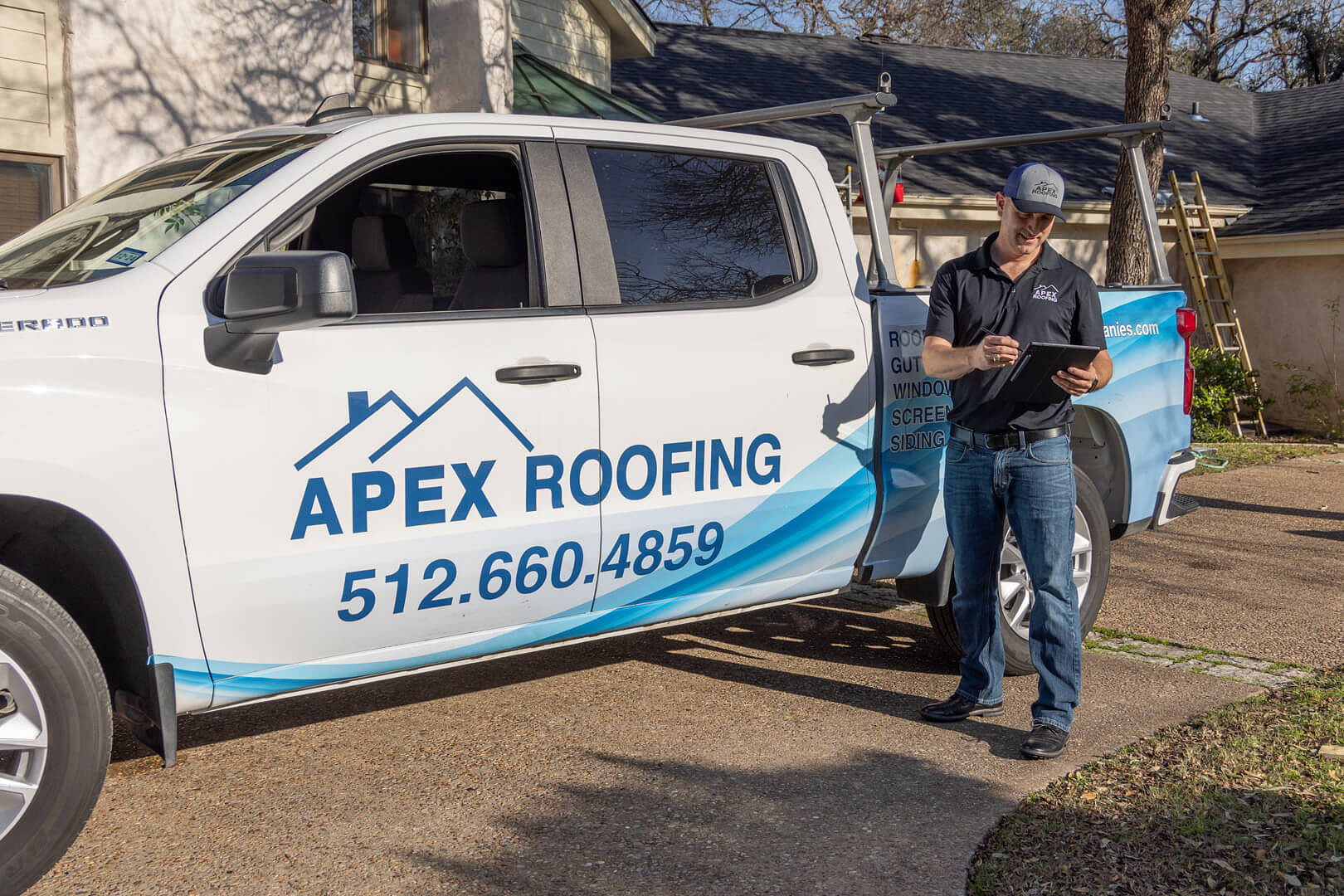
During a roof maintenance visit, APEX Roofing inspects the roof and documents what we find in photos and video, so you can see its condition for yourself. If repairs are needed, you receive a written quote with the scope and materials before any work begins.

A Seasonal Roof Maintenance Checklist
Spring
- Look for damage from winter weather, and schedule a post-freeze inspection after a hard freeze
- Clean gutters and downspouts
- Trim branches before storm season
- Check the roof after each spring storm
Summer
- Check the attic for excessive heat and poor airflow
- Look for curling or blistered shingles
- Check rubber vent boots for cracking
Fall
- Clean gutters after the leaves drop
- Look over flashing and seals before winter rain
- Trim back any new growth over the roof
Winter
- Check the attic for condensation or dripping nails
- Look for damage after a hard freeze
- Watch ceilings for new stains during winter rain
FAQ
Plan to look over your roof from the ground and clean your gutters at least twice a year, usually in spring and fall. A professional inspection every year or two, and after any major storm, catches problems that are hard to see from the ground.
Roof maintenance usually includes inspecting the shingles or tiles, checking flashing and seals around vents, chimneys, and skylights, clearing gutters and debris, looking in the attic for leaks and ventilation problems, and making small repairs before they grow.
Many tasks, such as checking the roof from the ground, cleaning gutters from a ladder, trimming branches, and looking in the attic, are reasonable for most homeowners. Walking on the roof, repairing flashing, and replacing shingles are safer left to a roofer.
Photos and records of inspections and repairs give you a clear history of the roof's condition, which can be useful if you need to file a claim after a storm. Your insurance company decides what is covered.
Spring and fall work best for most Central Texas homes. A spring check catches winter damage before storm season, and a fall check clears gutters and catches problems before winter rain.
Yes. Hail damage to shingles is often hard to see from the ground, and dented vents or gutters can be the only visible sign. An inspection with photos gives you a record of the roof's condition if you need to file a claim.
Lifespan depends on the roofing material, the quality of the installation, ventilation, and the weather the roof sees. Regular maintenance helps a roof reach the full lifespan its material is designed for instead of failing early from a problem that went unnoticed. When a roof does reach the end of its life, a few clear signs show when to replace your roof.
Schedule Roof Maintenance With APEX Roofing Today
Routine roof maintenance can help catch small problems before they turn into more expensive repairs. It also gives homeowners a better idea of how their roof is aging and whether any areas need attention. APEX Roofing can inspect your roof, point out signs of wear, and recommend the repairs or maintenance that make sense for your home. Contact APEX Roofing to schedule a roof maintenance visit and receive a clear assessment of your roof's condition, along with a written quote for any work that may be needed.